Not on its own. No chair will raise your aim or your rank by itself. What a good one does is keep you comfortable and steady through a long session, so your attention stays on the game rather than on your back or shoulders. Add a desk at the right height, a monitor in the right place and room for the mouse, and the setup stops getting in your way.
Where a Chair Comes In
Skill comes from practice, game sense and reaction time. A chair has no say in any of those. It cannot make you faster, and we would not claim it does.
What it can change is the third hour. Over a long session the small things add up: a seat that is too low, armrests that push your shoulders up, a lower back with nothing behind it. You start shifting, leaning on one elbow, sliding forward in the seat. None of that shows on a scoreboard straight away, but over an evening it pulls focus, and a chair that holds you in a steady position takes those distractions away.
Comfort Over a Long Session
The parts that matter are the ones you sit on and lean against. Cybeart's APEX and NEO chairs both use high-density cold-cured moulded foam in the seat and backrest. Lower-back support differs by platform. APEX has the ErgoSync™ built-in 4D lumbar, set with two knobs for height and depth. NEO has a lumbar arch in the backrest plus a memory-foam lumbar pillow you can add.

For your neck, both come with the AeroMag™ pillow, cooling-gel memory foam held on by magnets, so it stays put with no straps. Between matches you can recline up to 135° and lock the back where you want it, then sit up again for the next round.
A Steady Position at the Desk
Get a few heights right and a steady posture follows. Your feet should rest flat, with your knees roughly level with your hips. Your elbows should sit close to desk height, so your forearms lie on the desk or the armrests without lifting your shoulders.
On APEX and NEO the seat sits 48 to 56 cm from the floor, with 8 cm of travel on a Class 4 gas lift, and the 4D armrests run from 67.5 to 75 cm off the floor. They also slide 4 cm forward or back and 2.5 cm sideways, which helps bring them under your forearms. The chairs fit people from 5'5" to 6'4" (165 to 193 cm) and are rated to 330 lb (150 kg). Setting a chair up for the first time? Our guide on how to set up your gaming chair for good posture takes it step by step.
The Rest of the Setup
The chair is one part of the desk. Four other things decide how comfortable a session feels.
- Desk height. If the desk is too high, no armrest setting will bring your shoulders down. Set the chair to the desk first, then match the armrests to it.
- Monitor position. Put the screen straight ahead at about arm's length, with the top edge near eye level, so you are not craning forward to read the minimap.
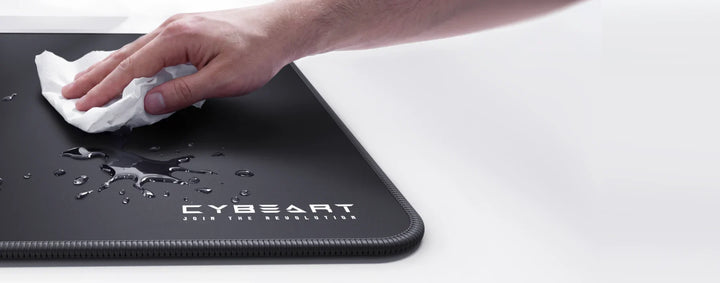
- Mouse room. Players on a low sensitivity move the whole arm and need space to do it. A large desk mat, such as a 900 × 400 mm pad, gives the mouse that room, and a compact keyboard leaves more of it free.
- Breaks. Stand up between matches. A chair that reclines and locks makes a short rest easy, but nothing replaces getting up, walking around the room and coming back with fresh eyes.
Get those right and you stop noticing the chair at all.
Who Notices the Difference
Play for an hour after dinner and almost any chair that fits you will do. The difference shows for people who play long evenings, stream, or work and play at the same desk all day. For them, a chair that holds its shape and adjusts to their body will not win a single match, but it keeps them sitting comfortably at midnight.
To see how APEX and NEO compare part by part, start with the gaming chairs page.